
• Link to Instagram
  • Link to LinkedIn
  • Link to Youtube
  • Log In
  • Book A Demo
Coplan / KIT
  • Home
  • Products
      • KIT
      • kiticonExplore KIT – Simplify your tool control with KIT’s no-nonsense, intelligent tool management system.
      • coshhCOSHH & Safety – Stay on top of your COSHH items with real-time information, ensuring you are always in the know.
      • auditsTool Audits – Say goodbye to time-consuming manual audits with visual tool audits that take seconds.
      • Clear Title
      • calibrationTool Calibration – Streamlined, effortless tool calibration management and centralised record management.
      • inventoryTool Inventory Management – Complete record management of your tool inventory in one central system for audit bliss.
      • standardisationTool Standardisation – Your gateway to enhanced productivity and tool familiarisation whilst preventing tool creep.
      • Other Products & Services
      • protection-foamProtection Foams – Specialist foam pads designed to protect valuable aerospace assets during manufacture and servicing.
      • inlaysFoam Inlays (Drawers & Cases) – Custom designed foam inlays for bringing order to tool cabinets, workshop drawers and tool cases.
      • shadow-boardShadow Boards (Foam & Vinyl) – Foam or vinyl shadow boards for organising and storing tools and large equipment.
      • trainingProfessional Services & Training – Maximise the benefit your teams gain from your KIT investment with on-site, online or classroom training options.
  • Industries
      • aerospoaceAerospace – KIT heightens tool visibility, automates audit and calibration processes to ensure you’re always ready for AS9100, NADCAP or internal audits and never caught off guard.
      • automotiveAutomotive – KIT drives compliance with IATF 16949, ISO 9001, and OEM-specific standards, providing total tool visibility with effortless compliance.
      • defenceDefence – KIT eliminates visibility gaps and automates tool control processes to meet MAA, DEF STAN, ISO and internal inspection standards and keep you audit-ready without disruption.
      • food-drinkFood & Drink – KIT is the key ingredient to tool traceability, calibration and zonal control, minimising production disruption and simplifying BRCGS, HACCP, ISO22000 and retailer audit compliance.
  • Case Studies
  • News & Events
        • blogBlog – Our latest articles, guidance, and thought pieces about the impact of intelligent tool control in modern manufacturing, including 5S, Smart Manufacturing, AI and others.
        • newsNews – Catch up with the latest announcements, stories, milestones and updates shaping our company.
        • eventsEvents – Here’s our calendar of planned industry and company events where you can find us throughout the year.
  • About Us
      • careersCareers – What you can expect from us, the opportunities we have open and our values around career growth, learning and development.
      • historyHistory – Learn about our past, present and future, where we have come from, how we have evolved and where we see ourselves going in the future.
      • standards-and-ethicsOur Standards & Approach – Compliance and quality is where it counts for our customers and so it is for us. So here’s our commitments and values.
      • partnersPartners & Memberships – Working in industry is about being part of a larger community and working together. We believe we have some of the best partnerships in the business.
  • Contact Us
  • Menu Menu

Calibration is broken: Why every industry is rethinking tool compliance

June 2, 2026/in Blog/by Wayne Stant

Most manufacturers pass their calibration audits. That doesn’t mean their calibration systems actually work.

Because passing an audit isn’t the same as being in control.

Across food production lines, aerospace MRO bays, automotive plants, and defence facilities, calibration is still treated as a periodic checkbox exercise. Tools are calibrated, certificates are stored, spreadsheets are updated, and when the auditor arrives, everything looks fine.
But step onto the shop floor, and a different picture often emerges:

  • Tools that are technically “in calibration”, but not verified in context
  • Records that exist, but aren’t trusted
  • Schedules that are followed, but don’t reflect real-world usage

The uncomfortable truth is this: calibration isn’t failing because of poor intent. It’s failing because the system it relies on hasn’t evolved.

The problem isn’t calibration. It’s how we manage it.

For decades, calibration has followed the same model:
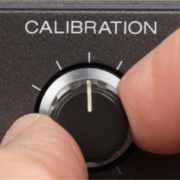
  • Fixed intervals (every 3, 6, or 12 months)
  • Manual tracking via spreadsheets or disconnected systems
  • Reactive workflows driven by audits rather than operations

That worked when manufacturing was simpler, slower, and less connected. But today, production environments are fundamentally different:

  • Tools feed data directly into quality decisions
  • Systems are expected to be digitally traceable
  • Audits demand end-to-end visibility, not just documentation

And yet, many calibration processes are still running on legacy assumptions.

Compliance hasn’t got harder. It’s just more honest.

Regulations across industries are tightening, but not arbitrarily.

  • Food manufacturing audits increasingly expose documentation and traceability gaps, not just hygiene issues
  • Aerospace standards demand higher levels of traceability and calibration control across assets
  • ISO frameworks are shifting toward data integrity and digital traceability at system level

What’s changed is simple: auditors are no longer just checking if records exist; they’re checking if they can be trusted.
This is where traditional calibration systems start to break down.

The gap between “in calibration” and “in control”.

A tool marked as “in calibration” creates a false sense of certainty.
Because that label doesn’t tell you:

  • Whether the tool has drifted since its last check
  • Whether it’s being used outside its intended conditions
  • Whether the data it produces is still reliable

In high-precision environments, even small deviations have a measurable impact.

  • Minor calibration issues can delay aerospace operations and trigger rework
  • Slight inaccuracies in manufacturing can lead to scrap, yield loss, or compliance risk

The risk isn’t obvious failure. It’s silent inaccuracy.

Calibration was designed for a different era.

Traditional calibration models are built around time-based scheduling:

  • “Calibrate every 6 months”
  • “Check annually”

But this ignores how tools are actually used. Some tools operate continuously under heavy load. Others are rarely used. Treating them the same doesn’t improve compliance; it just creates unnecessary work in some areas, and risk in others.
That’s why leading organisations are moving toward:

  • Risk-based calibration
  • Usage-driven schedules
  • Drift detection and predictive alerts

Calibration is shifting from a calendar event to a continuous signal.

The rise of the connected tool.

At the same time, the tools themselves are changing. Across industries, we’re seeing rapid adoption of:

  • RFID and RTLS for real-time tool tracking
  • IoT-enabled instruments streaming performance data
  • Integrated systems connecting tools to quality and production workflows

This changes the role of calibration entirely. Tools are no longer static assets. They are live data sources.
And once tools start generating data that drives decisions, calibration becomes more than a compliance task.
It becomes a data integrity problem.

The real bottleneck: fragmentation.

Most calibration failures don’t come from bad engineering. They come from disconnected systems:

  • Calibration records stored in one place or multiple scattered locations
  • Tool tracking handled somewhere else or not at all
  • Audit evidence assembled manually under pressure

In many organisations, there’s no single view of what tools exist, where they are, their calibration status and their audit history.
Without that visibility, teams rely on manual processes, workarounds and frantic last-minute audit preparation. And that’s where things break.

What “Good” looks like now.

Forward-looking manufacturers aren’t abandoning calibration. They’re rebuilding it around visibility and control. That means:


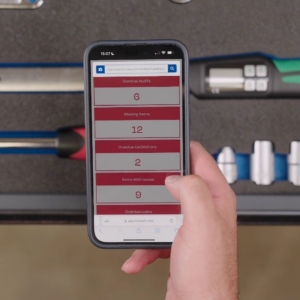
  • Centralised systems where tools, calibration, and audits connect
  • Real-time tracking so tool status is always visible
  • Automated alerts instead of manual reminders
  • Digital audit trails that don’t need to be reconstructed

The goal isn’t just to pass audits. It’s to ensure that at any moment, you can answer three simple questions:

  • What tools do we have?
  • Are they fit for use right now?
  • Can we prove it instantly?

Calibration isn’t broken. But the way we think about it is.

Calibration was once a back-office function. Today, it sits at the intersection of Quality, Operations, Compliance and Data / Business Intelligence.
And that changes the expectations entirely. The companies that are getting ahead aren’t asking
“Are we compliant?”, they’re asking “Do we have control?”
Because in modern manufacturing, compliance is just the outcome. Control is the advantage.

Final thought.

If your calibration process still depends on static schedules, manual records and disconnected systems, it’s not future-proof. It’s fragile…and it will leave you exposed.
And in an environment where precision, traceability, and auditability are non-negotiable, that fragility quickly becomes risk.

https://thisiskit.com/wp-content/uploads/2026/05/calibration-broken-banner.png 400 1200 Wayne Stant https://thisiskit.com/wp-content/uploads/2026/02/kit-logo.png Wayne Stant2026-06-02 09:00:002026-06-02 09:11:18Calibration is broken: Why every industry is rethinking tool compliance

Pages

  • Aerospace
  • Automotive
  • Blog
  • Careers
  • Case Studies
  • Contact Us
  • Coplancontrol
  • COSHH & Safety
  • Defence
  • Events
  • Explore Kit
  • Foam Inlays (Drawers & Cases)
  • Food & Drink
  • History
  • News
  • Our Standards & Approach
  • Partners & Memberships
  • Privacy Policy
  • Professional Services
  • Protection Foams
  • Resources
  • Shadow Boards (Foam & Vinyl)
  • Terms & Conditions
  • Terms of Access
  • Terms of Use
  • Tool Audits
  • Tool Calibration
  • Tool Inventory Management
  • Tool Standardisation
  • Welcome

Categories

  • Aerospace
  • Automotive
  • Blog
  • Case Study
  • COSHH & Safety
  • Defence
  • Event
  • ExploreKit
  • Foam Inlays
  • News
  • Professional Services & Training
  • Shadow Boards
  • Tool Audits
  • Tool Calibration
  • Tool Inventory Management
  • Tool Standardisation

Archive

  • June 2026
  • May 2026
  • April 2026
  • March 2026
  • January 2026
  • December 2025
  • November 2025
  • October 2025
  • September 2025
  • March 2025
  • February 2025
  • May 2024
  • February 2024
  • January 2024
  • November 2023
  • July 2023
  • May 2023
  • April 2023
  • March 2023
  • July 2022
  • January 2022
  • July 2021
  • May 2021

Take Your Next Step

Click a button below to move one step closer to realising how KIT can simplify your tool management

Read more about KIT Watch Demo Request Info Schedule a Call

KIT® is a registered trademark of Coplan Ltd

Location Location Coplan Ltd, 28 Vincent Avenue, Crownhill, Milton Keynes, MK8 0AB

Phone Phone +44 (0)1908 307956

Mail Mail info@coplancontrol.com

General

Home
Careers
History
Our Standards & Approach
Partners & Memberships
Resources

News & Views

Blog
Case Studies
Events
News

Products

ExploreKIT
COSHH & Safety
Tool Audits
Tool Calibration
Tool Inventory Management
Tool Standardisation
Professional Services & Training
Explore COPLAN Foams
Protection Foams
Foam Inlays
Shadow Boards

Industries

Aerospace
Automotive
Defence
Food & Drink

Contact Us

General
Book a Discovery Call

KIT® is a registered trademark of Coplan Ltd

Location Location Coplan Ltd, 28 Vincent Avenue, Crownhill, Milton Keynes, MK8 0AB

Phone Phone +44 (0)1908 307956

Mail Mail info@coplancontrol.com

General

Home
Careers
History
Our Standards & Approach
Partners & Memberships
Resources

News & Views

Blog
Case Studies
Events
News

Products

ExploreKIT
COSHH & Safety
Tool Audits
Tool Calibration
Tool Inventory Management
Tool Standardisation
Professional Services & Training
Explore COPLAN Foams
Protection Foams
Foam Inlays
Shadow Boards

Industries

Aerospace
Automotive
Defence
Food & Drink

Contact Us

General
Book a Discovery Call

©2026 KIT is a trading style of Coplan Limited
  • Link to Instagram
  • Link to LinkedIn
  • Link to Youtube
  • Terms & Conditions
  • Privacy Policy
  • Terms of Use
  • Terms of Access
Scroll to top Scroll to top Scroll to top
  • Home
  • Products
    • KIT
    • Explore KIT
    • COSHH & Safety
    • Tool Audits
    • Clear Title
    • Tool Calibration
    • Tool Inventory Management
    • Tool Standardisation
    • Other Products & Services
    • Protection Foams
    • Foam Inlays (Drawers & Cases)
    • Shadow Boards (Foam & Vinyl)
    • Professional Services & Training
  • Industries
    • Aerospace
    • Automotive
    • Defence
    • Food & Drink
  • Case Studies
  • News & Events
    • Blog
    • News
    • Events
  • About Us
    • Careers
    • History
    • Our Standards & Approach
    • Partners & Memberships
  • Contact Us