• Link to Instagram
  • Link to LinkedIn
  • Link to Youtube
  • Log In
  • Book A Demo
Coplan / KIT
  • Home
  • Products
      • KIT
      • kiticonExplore KIT – Simplify your tool control with KIT’s no-nonsense, intelligent tool management system.
      • coshhCOSHH & Safety – Stay on top of your COSHH items with real-time information, ensuring you are always in the know.
      • auditsTool Audits – Say goodbye to time-consuming manual audits with visual tool audits that take seconds.
      • Clear Title
      • calibrationTool Calibration – Streamlined, effortless tool calibration management and centralised record management.
      • inventoryTool Inventory Management – Complete record management of your tool inventory in one central system for audit bliss.
      • standardisationTool Standardisation – Your gateway to enhanced productivity and tool familiarisation whilst preventing tool creep.
      • Other Products & Services
      • protection-foamProtection Foams – Specialist foam pads designed to protect valuable aerospace assets during manufacture and servicing.
      • inlaysFoam Inlays (Drawers & Cases) – Custom designed foam inlays for bringing order to tool cabinets, workshop drawers and tool cases.
      • shadow-boardShadow Boards (Foam & Vinyl) – Foam or vinyl shadow boards for organising and storing tools and large equipment.
      • trainingProfessional Services & Training – Maximise the benefit your teams gain from your KIT investment with on-site, online or classroom training options.
  • Industries
      • aerospoaceAerospace – KIT heightens tool visibility, automates audit and calibration processes to ensure you’re always ready for AS9100, NADCAP or internal audits and never caught off guard.
      • automotiveAutomotive – KIT drives compliance with IATF 16949, ISO 9001, and OEM-specific standards, providing total tool visibility with effortless compliance.
      • defenceDefence – KIT eliminates visibility gaps and automates tool control processes to meet MAA, DEF STAN, ISO and internal inspection standards and keep you audit-ready without disruption.
      • food-drinkFood & Drink – KIT is the key ingredient to tool traceability, calibration and zonal control, minimising production disruption and simplifying BRCGS, HACCP, ISO22000 and retailer audit compliance.
  • Case Studies
  • News & Events
        • blogBlog – Our latest articles, guidance, and thought pieces about the impact of intelligent tool control in modern manufacturing, including 5S, Smart Manufacturing, AI and others.
        • case-studiesCase Studies – Stay up to date with stories from KIT and Coplan customers about their experience and the impact of our solutions on their businesses.
        • eventsEvents – Here’s our calendar of planned industry and company events where you can find us throughout the year.
        • newsNews – Catch up with the latest announcements, stories, milestones and updates shaping our company.
  • About Us
      • careersCareers – What you can expect from us, the opportunities we have open and our values around career growth, learning and development.
      • historyHistory – Learn about our past, present and future, where we have come from, how we have evolved and where we see ourselves going in the future.
      • standards-and-ethicsOur Standards & Approach – Compliance and quality is where it counts for our customers and so it is for us. So here’s our commitments and values.
      • partnersPartners & Memberships – Working in industry is about being part of a larger community and working together. We believe we have some of the best partnerships in the business.
  • Contact Us
  • Menu Menu

5 Common Calibration Mistakes And How To Unlock Peak Performance

November 18, 2025/in Blog, Professional Services & Training, Tool Calibration/by coplan

Effective tool calibration is as much about confidence and piece of mind as compliance

Why worry about tool calibration?

In manufacturing, tool calibration isn’t just a compliance checkbox to be ticked just before your audits are due, it’s a major factor in preventing unplanned downtime, optimising productivity and ensuring product quality.

With downtime costing many thousands of pounds per hour, no organisation can afford such interruptions, especially when they’re preventable. Even experienced teams can benefit from fine-tuning their calibration approach to save time, reduce costs, and strengthen reputation.

This blog covers the five most common calibration mistakes in manufacturing, their impact and how to avoid them. For a deeper dive of some of the other common calibration mistakes, read this article published in AutomationForum.co.

Mistake 1: Skipping scheduled calibrations

Whether it’s the pressure of tight deadlines, a drive to hit the numbers, cost-saving attempts or just down to a lack of visibility, skipping calibrations always costs more in the long-run.

Whether it results in increased measurement errors, equipment malfunction or breakdown, product rework or quality issues, safety incidents or failed audits, they all hurt the organisation. Whereas staying on schedule ensures accuracy, reliability, and long-term savings.

Avoiding it can be simple. Implement automated schedules, which send out early and overdue reminders and increase their visibility via dashboards that are shared across the management team, so that nothing is left to chance.

Mistake 2: Using incorrect standards or reference equipment

Whilst staff turnover and training can certainly be a factor in not adhering to correct calibration standards, it’s more often due to lack of a clearly documented procedure and nominated test equipment and referring to outdated standards.

By not keeping up with the latest standards or equipment, tools can often seem like they are giving the right results, only to later find that the results were inaccurate and tools were out of tolerance. In severe circumstances, this can lead non-compliances, fines, product defects and other reputational damage.

Updating processes ensures your team benefits from the latest standards and best practices and with a clear calibration policy outlining measurements, expected results and nominated test equipment, there can be no confusion.
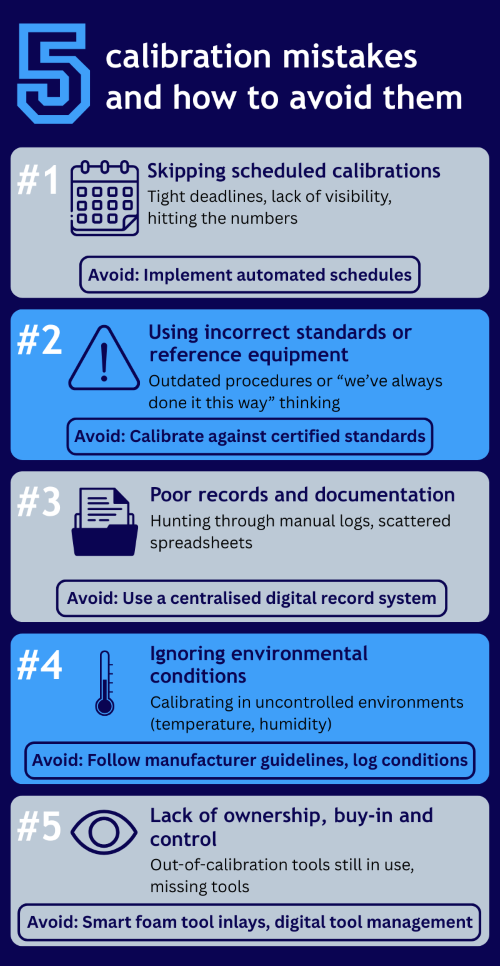
 

Mistake 3: Poor records and documentation

Relying on manual logs and practices that can be traced back decades is still commonplace. Logs filed away somewhere in old lever arch files, held on clipboards scattered around the shop floor or even on various spreadsheets stored on different servers do not create the right impression on an auditor who wants to see records that are complete, legible and controlled.

This can cost the organisation dearly, with audit failures and inability to prove compliance leading to sanctions, fines or a complete cessation of production until practices are changed and shown to be under control.

Avoiding this needn’t be scary. Digital records not only make calibrations easier to manage, they also make audits smoother and showcase your commitment to quality.

Mistake 4: Ignoring environmental conditions

When calibrating tools, environment conditions such as temperature, humidity and air quality can impact the consistency and accuracy of your calibration test results just as much as dirt, wear or damage on the tool or the test equipment.

Avoiding this is usually means observing the manufacturer’s guidelines and logging the test conditions under which the calibrations took place. On highly specialist or sensitive equipment, controlled conditions protect your tools and ensure consistent, accurate results. Engaging external calibration services who live and breathe these ultra-controlled conditions is often the most cost-efficient way to guarantee the validity of the calibration..

Always ensure that regardless of whether conducted internally or externally, environmental conditions are captured as part of the calibration record in case you need to rule out such factors in any root cause analysis for any failures.

Mistake 5: Lack of ownership, buy-in and control

Ownership of key tasks like tool calibration is sometimes de-prioritised when in a pinch. But as stated earlier, it is a mistake that is likely to lead to errors in production or safety hazards that slow down or even halt production. Instead, empowering teams, as detailed in our earlier blog on “7 ways to ease the pain of calibration”, with clear ownership builds confidence and pride in quality and all but eliminates these avoidable issues.

Equally, visual tool control solutions like foam inlays in tool cabinets and shadowboards twinned with digital tool management solutions ensure that tools don’t get mixed up or lost between shifts or lines and out-of-calibration tools are taken out of use thus avoiding costly usage errors. This investment gives teams confidence that they can trust their tools, and invokes an added sense of pride, care and ownership in wanting to look after their tools properly.

Conclusion

Avoiding these mistakes and adopting best practices isn’t just about compliance, it’s about confidence in every measurement. And it can be a lot easier than it seems.

Recently awarded Calibration Product of the Year, KIT makes calibration management simple, visual, and audit-ready.

Here’s how KIT helps avoid these pitfalls:

  1. Automated scheduling with reminders and dashboards for visibility.
  2. User-defined digital calibration policies aligned with ISO and manufacturer standards.
  3. Centralised records for calibration and audit histories.
  4. Environmental data logging and certificate storage.
  5. Visual control systems and a digital twin that promote ownership, accountability and pride.
 

https://thisiskit.com/wp-content/uploads/2026/03/conc.jpg 1414 2121 coplan https://thisiskit.com/wp-content/uploads/2026/02/kit-logo.png coplan2025-11-18 13:41:402026-04-30 16:49:145 Common Calibration Mistakes And How To Unlock Peak Performance

Why Calibration Schedules Matter

November 3, 2025/in Blog, Tool Calibration/by coplan

Achieve operational excellence with automated calibration schedules that make sense for your team.

How big a challenge is calibration anyway?

In industries where precision is non-negotiable, such as manufacturing, aerospace, automotive, healthcare, and energy, calibration schedules are essential to maintaining the accuracy, reliability, and compliance of measurement instruments.

This article explores what calibration schedules are, why they’re important, and how KIT helps organisations manage them efficiently.

What tools are we talking about?

In today’s engineering and mass production world, the sheer volume and variety of tools and equipment requiring regular calibration can be overwhelming, especially when tracked manually. Regular calibration is vital to keep them working accurately and reliably to minimise downtime and delay.

Tools such as:

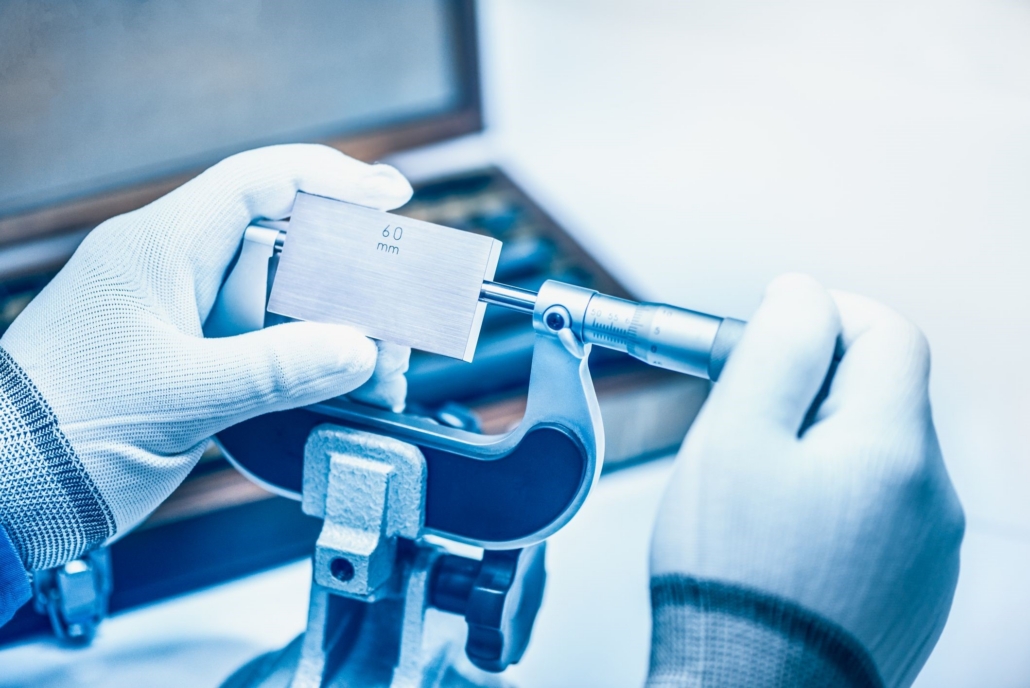
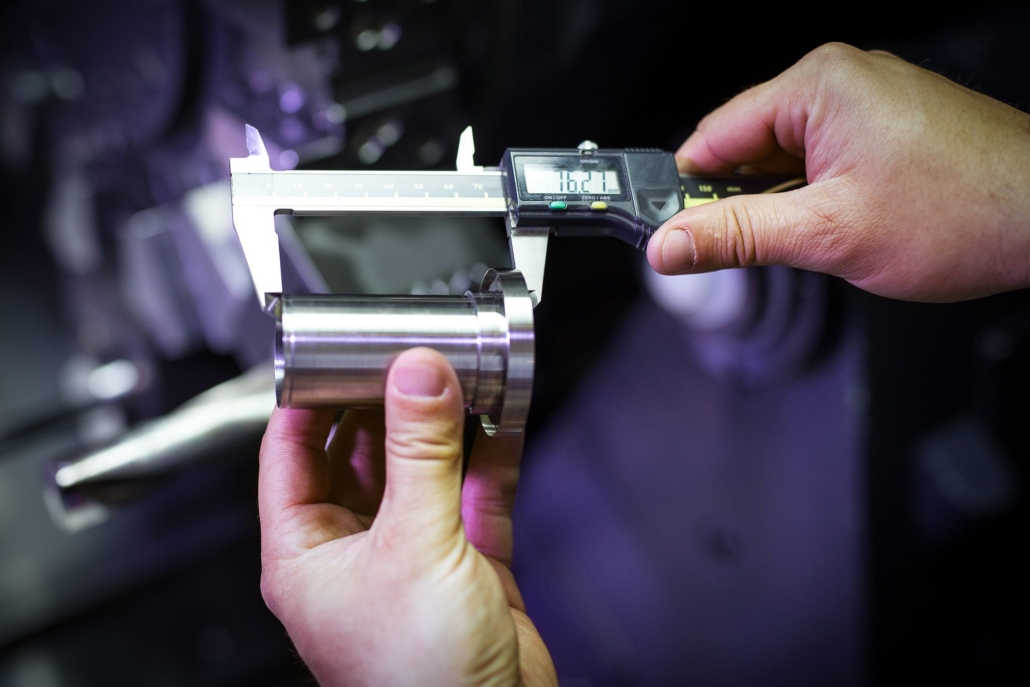
  1. Mechanical tools: Micrometers, calipers, torque wrenches, crimping tools
  2. Electrical tools: Multimeters, torque drivers, electrical testers
  3. Environmental & lab equipment: Thermometers, balances and scales, spectrometers, environmental chambers
  4. Force & pressure instruments: Load cells, pressure gauges, hardness testers

And that’s just for starters. But managing all these tools manually is a major challenge.

Despite its importance, calibration often falls to the bottom of the priority list, seen as tedious and time-consuming. Motivating a team to take it seriously can also be a challenge, but is eminently doable, as we highlighted in our earlier blog “7 ways to ease the pain of calibration”.

Conversely, the consequences both immediately and longer-term of skipping calibrations can be significant. as International Process Solutions, Inc identified in their excellent blog on The Role of Calibration in Precision and Compliance.

The easiest way to ensure calibrations aren’t missed is to determine a calibration schedule that works for the needs of your business.

What is a calibration schedule?

A calibration schedule is a structured timing plan that defines when and how often equipment or instruments should be calibrated to ensure they continue to perform within specified tolerances. These schedules are typically based on:

  • Manufacturer recommendations
  • Industry standards (e.g., ISO 9001, ISO/IEC 17025)
  • Historical performance data
  • Risk assessments and criticality of the instrument
  • Specific usage patterns of the organisation
  • Timing of key projects or production runs

There are no absolutes here about how often you should calibrate and it is about finding what works for your organisation and keeps you compliant with the regulations of your particular industry.

Why calibration schedules are important

Accuracy and reliability

Regular calibration ensures instruments provide accurate measurements, which is vital for quality control, safety, and operational decision-making. The knock-on effects of poorly calibrated instruments and tools is well documented in some of the earlier blog links, but the effect on trust, perceptions and relationships internally cannot be underestimated. No-one wants to be seen as the shabby and ineffective part of the organisation or have their work questioned at every turn. Showing that you have accuracy and reliability nailed breeds trust and respect.

Compliance and auditing

Many industries are governed by strict regulations. A documented calibration schedule helps meet compliance requirements and prepares organisations for audits. A schedule backed by evidence of calibrations being performed on a regular basis makes the difference between sailing through audits and having non-conformance black marks and makes for uncomfortable moments with the auditors and the rest of the management team.

Preventive maintenance

Calibration schedules can reveal drift trends or early signs of equipment failure, enabling proactive maintenance and reducing downtime. Improving uptime and yield metrics through being proactive and repairing, replacing or servicing equipment before it affects productivity shows a team with discipline and a team that can be relied on to get the job done right.

Cost efficiency

While calibration does come with a cost, the potential impact of unplanned failures or product recalls due to inaccurate measurements can be significantly greater. Sometimes, issues can arise from raw components or sub-assemblies, and without thorough inspection and testing, these can be difficult to detect. The good news is that your tools are within your control. Mistakes are understandable, but if patterns of tool neglect emerge, they can be more challenging to justify. Proactive maintenance and calibration help ensure reliability and reduce risk.

How KIT supports calibration schedule management

KIT is a tool and equipment inventory management platform designed to simplify and automate equipment lifecycle management, including calibration workflows. Here’s how KIT enhances calibration scheduling:

Automated scheduling & notifications

KIT allows users to set custom calibration policies and schedules for each asset. The system automatically generates reminders and alerts for upcoming or overdue calibrations, reducing the risk of missed events. KIT’s dashboard highlights upcoming, overdue and failed calibrations, giving actionable insight to managers from which they can determine their next steps to keep things under control before they become an issue.

Digital calibration records

Every calibration event is logged with date, technician, policy, individual test results and outcome, including generation of a calibration certificate, creating a traceable audit trail over time. These records are accessible in real-time and exportable for compliance reporting.

Calibration history & trend analysis

KIT tracks calibration performance over time by maintaining records of all calibrations, helping users identify instruments that frequently drift or require more frequent attention. This supports risk-based scheduling and smarter resource allocation or decisions about whether to switch to alternative tooling that may be more suitable to your environment and needs.

Integration with inventory & audit modules

Calibration schedules are linked directly to KIT’s inventory and visual audit tools, ensuring that calibration status is visible during inspections and asset reviews. Being able to demonstrate that you have comprehensive records for each of your tools is not difficult, but can be a real game-changer with auditors.

Support for complex, multi-site operations

For organisations with multiple facilities, KIT enables centralised calibration management across locations, with scheduling and reporting that can be customised to be site or project specific. Being able to set expectations for each project or site rather than have to abide by schedules that simply don’t make sense for that team or site, means adherence and compliance is working for you rather than against you and is more likely to find support in the teams responsible for the work.

Conclusion

Calibration schedules are critical for ensuring measurement accuracy, regulatory compliance, and operational efficiency. With KIT, organisations can shift from manual tracking to automated, intelligent calibration management, reducing risk, boosting performance, and turning calibration from a dreaded task to the backbone of trust and reliability across operations.

https://thisiskit.com/wp-content/uploads/2026/03/41.jpg 1415 2119 coplan https://thisiskit.com/wp-content/uploads/2026/02/kit-logo.png coplan2025-11-03 16:08:122026-04-29 16:51:08Why Calibration Schedules Matter

Pages

  • Aerospace
  • Aerospace
  • Automotive
  • Blog
  • Careers
  • Case Studies
  • Contact Us
  • Coplancontrol
  • COSHH & Safety
  • Defence
  • Events
  • Explore Kit
  • Foam Inlays (Drawers & Cases)
  • Food & Drink
  • History
  • News
  • Our Standards & Approach
  • Partners & Memberships
  • Professional Services
  • Protection Foams
  • Resources
  • Sample Page
  • Shadow Boards (Foam & Vinyl)
  • Tool Audits
  • Tool Calibration
  • Tool Inventory Management
  • Tool Standardisation
  • Training
  • Welcome
  • Welcome 2

Categories

  • Aerospace
  • Automotive
  • Blog
  • Case Study
  • COSHH & Safety
  • Defence
  • Event
  • ExploreKit
  • Foam Inlays
  • News
  • Professional Services & Training
  • Shadow Boards
  • Tool Audits
  • Tool Calibration
  • Tool Inventory Management
  • Tool Standardisation

Archive

  • May 2026
  • April 2026
  • March 2026
  • January 2026
  • December 2025
  • November 2025
  • October 2025
  • September 2025
  • March 2025
  • February 2025
  • May 2024
  • February 2024
  • January 2024
  • November 2023
  • July 2023
  • May 2023
  • April 2023
  • March 2023
  • July 2022
  • January 2022
  • July 2021
  • May 2021

Take Your Next Step

Click a button below to move one step closer to realising how KIT can simplify your tool management

Read more about KIT Watch Demo Request Info Schedule a Call

KIT® is a registered trademark of Coplan Ltd

Location Location Coplan Ltd, 28 Vincent Avenue, Crownhill, Milton Keynes, MK8 0AB

Phone Phone +44 (0)1908 307956

Mail Mail info@coplancontrol.com

General

Home
Careers
History
Our Standards & Approach
Partners & Memberships
Resources

News & Views

Blog
Case Studies
Events
News

Products

ExploreKIT
COSHH & Safety
Tool Audits
Tool Calibration
Tool Inventory Management
Tool Standardisation
Professional Services & Training
Explore COPLAN Foams
Protection Foams
Foam Inlays
Shadow Boards

Industries

Aerospace
Automotive
Defence
Food & Drink

Contact Us

General
Book a Discovery Call

KIT® is a registered trademark of Coplan Ltd

Location Location Coplan Ltd, 28 Vincent Avenue, Crownhill, Milton Keynes, MK8 0AB

Phone Phone +44 (0)1908 307956

Mail Mail info@coplancontrol.com

General

Home
Careers
History
Our Standards & Approach
Partners & Memberships
Resources

News & Views

Blog
Case Studies
Events
News

Products

ExploreKIT
COSHH & Safety
Tool Audits
Tool Calibration
Tool Inventory Management
Tool Standardisation
Professional Services & Training
Explore COPLAN Foams
Protection Foams
Foam Inlays
Shadow Boards

Industries

Aerospace
Automotive
Defence
Food & Drink

Contact Us

General
Book a Discovery Call

©2026 KIT is a trading style of Coplan Limited
  • Link to Instagram
  • Link to LinkedIn
  • Link to Youtube
  • T&Cs
  • Privacy Policy
  • Terms of Use
  • Terms of Access
Scroll to top Scroll to top Scroll to top
  • Home
  • Products
    • KIT
    • Explore KIT
    • COSHH & Safety
    • Tool Audits
    • Clear Title
    • Tool Calibration
    • Tool Inventory Management
    • Tool Standardisation
    • Other Products & Services
    • Protection Foams
    • Foam Inlays (Drawers & Cases)
    • Shadow Boards (Foam & Vinyl)
    • Professional Services & Training
  • Industries
    • Aerospace
    • Automotive
    • Defence
    • Food & Drink
  • Case Studies
  • News & Events
    • Blog
    • Case Studies
    • Events
    • News
  • About Us
    • Careers
    • History
    • Our Standards & Approach
    • Partners & Memberships
  • Contact Us