
• Link to Instagram
  • Link to LinkedIn
  • Link to Youtube
  • Log In
  • Book A Demo
Coplan / KIT
  • Home
  • Products
      • KIT
      • kiticonExplore KIT – Simplify your tool control with KIT’s no-nonsense, intelligent tool management system.
      • coshhCOSHH & Safety – Stay on top of your COSHH items with real-time information, ensuring you are always in the know.
      • auditsVisual Tool Audits – Say goodbye to time-consuming manual audits with visual tool audits that take seconds.
      • Clear Title
      • calibrationTool Calibration Management – Streamlined, effortless tool calibration management and centralised record management.
      • inventoryTool Inventory Management – Complete record management of your tool inventory in one central system for audit bliss.
      • standardisationTool Standardisation – Your gateway to enhanced productivity and tool familiarisation whilst preventing tool creep.
      • Other Products & Services
      • protection-foamProtection Foams – Specialist foam pads designed to protect valuable aerospace assets during manufacture and servicing.
      • inlaysFoam Inlays (Drawers & Cases) – Custom designed foam inlays for bringing order to tool cabinets, workshop drawers and tool cases.
      • shadow-boardShadow Boards (Foam & Vinyl) – Foam or vinyl shadow boards for organising and storing tools and large equipment.
      • trainingProfessional Services & Training – Maximise the benefit your teams gain from your KIT investment with on-site, online or classroom training options.
  • Industries
      • aerospoaceAerospace – KIT heightens tool visibility, automates audit and calibration processes to ensure you’re always ready for AS9100, NADCAP or internal audits and never caught off guard.
      • automotiveAutomotive – KIT drives compliance with IATF 16949, ISO 9001, and OEM-specific standards, providing total tool visibility with effortless compliance.
      • defenceDefence – KIT eliminates visibility gaps and automates tool control processes to meet MAA, DEF STAN, ISO and internal inspection standards and keep you audit-ready without disruption.
      • food-drinkFood & Drink – KIT is the key ingredient to tool traceability, calibration and zonal control, minimising production disruption and simplifying BRCGS, HACCP, ISO22000 and retailer audit compliance.
  • Case Studies
  • News & Events
        • blogBlog – Our latest articles, guidance, and thought pieces about the impact of intelligent tool control in modern manufacturing, including 5S, Smart Manufacturing, AI and others.
        • newsNews – Catch up with the latest announcements, stories, milestones and updates shaping our company.
        • eventsEvents – Here’s our calendar of planned industry and company events where you can find us throughout the year.
  • About Us
      • careersCareers – What you can expect from us, the opportunities we have open and our values around career growth, learning and development.
      • historyHistory – Learn about our past, present and future, where we have come from, how we have evolved and where we see ourselves going in the future.
      • standards-and-ethicsOur Standards & Approach – Compliance and quality is where it counts for our customers and so it is for us. So here’s our commitments and values.
      • partnersPartners & Memberships – Working in industry is about being part of a larger community and working together. We believe we have some of the best partnerships in the business.
  • Contact Us
  • Menu Menu

What to look for in a tool calibration system provider

October 17, 2025/in Blog, ExploreKit, Professional Services & Training, Tool Calibration/by coplan

Choosing the right provider is as much about finding the right partner as the technology.

What to look for in choosing a tool calibration system

When it comes to tool calibration, accuracy is key. Whether you’re in manufacturing, engineering, or quality assurance, the tools you rely on need to be consistently calibrated to avoid errors, downtime, and compliance issues.

But choosing the right calibration system provider can be tricky. It’s not just about features, it’s about finding a solution and a partner that fits how your team works and grows with your needs. Here’s what to look for when evaluating your options.

1. Flexibility in calibration policies

Every organisation has its own standards and workflows. A good calibration system should let you define tool-specific policies that reflect your internal requirements that can change with you, not force you into rigid templates.

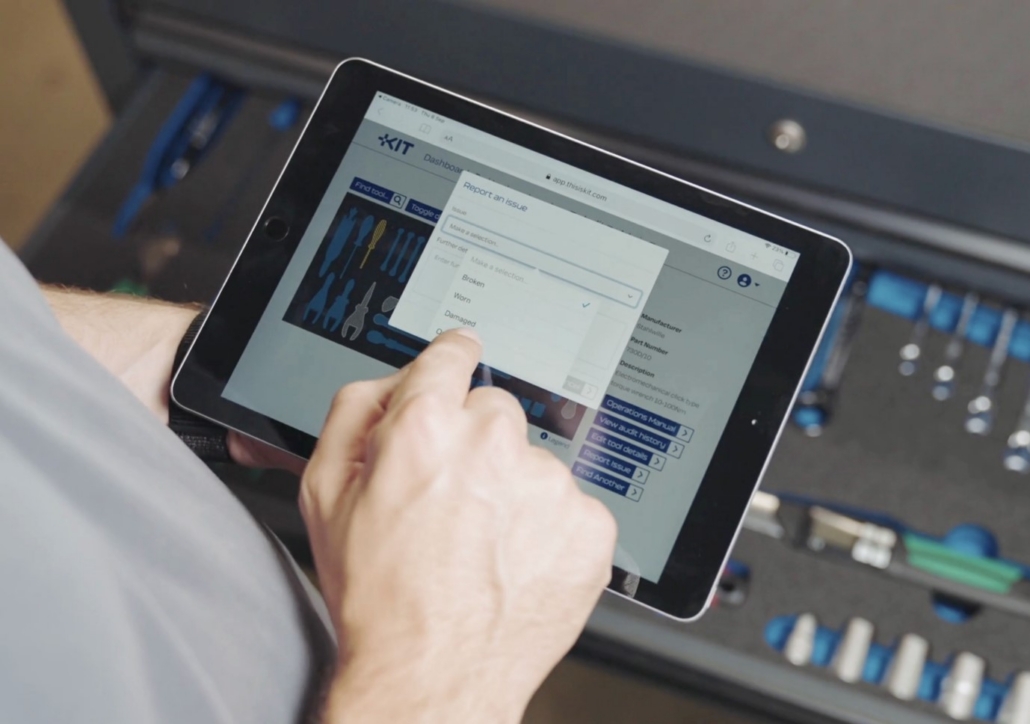
KIT, for example, allows users to configure calibration policies per tool, helping teams eliminate ambiguity and ensure every check is done right. This flexibility is especially useful in environments with mixed toolsets or varying compliance needs.

2. Clear audit trails and compliance support

Traceability is key. Look for systems that automatically log calibration events, flag overdue checks, and generate certificates. This makes it easier to stay compliant with standards like ISO 9001 or ISO 45001, and to prove it during audits.

KIT’s clickable calibration histories and automated certificate generation help teams maintain a clear record without the paper chase.

3. Ease of use for technicians and admins

If the system isn’t intuitive, it won’t get used properly. Choose a provider that prioritises user experience with clean interfaces, mobile access, and workflows that make sense for both technicians and managers.

One KIT customer in the aerospace sector shared this:

“KIT gives us complete control over our tool calibration. It’s so simple to use, yet audit-proof, scalable, and built for the complexity of aerospace. “

4. Data centralisation and integration

Tool calibration doesn’t happen in isolation. Your system should align or integrate with asset management, audit, reporting and ERP/procurement platforms to reduce manual data entry and keep everything in sync where relevant.

One-stop solutions like KIT create a place for everything and everything in one place, giving you confidence that your tool data needs are covered.

5. Scalability and support

Think beyond today. Can the system grow with your team? Does the provider offer onboarding help, responsive support, and regular updates? These are crucial when rolling out across multiple sites or departments.

6. Data visibility and reporting

You should be able to see what’s calibrated, what’s due, and what’s out of spec without digging through spreadsheets. Dashboards, alerts, and exportable reports should give you the answers you need to help you stay proactive.

7. Offline and remote capabilities

If your tools are used in the field or in areas with limited connectivity, offline functionality is a must. The system should sync seamlessly when back online, without risking data loss. Equally, if you are operating across a large site with multiple buildings or across multiple locations, the flexibility of being able to access and record data on the move is key.

But don’t just look at the software in isolation as this is more than just a procurement problem, look at the provider too.

Beyond the software: What makes a great calibration system partner

Choosing a calibration system is also about choosing the right people to work with. A true partner brings more than just technology. They bring insight, support, and a shared commitment to your success.

Here’s what to look for in the provider themselves:

1. Responsive, human support

AI agents and chatbots are great when you have a generic question or challenge, but when something goes wrong and you just need a quick answer, you don’t have time to be asking lots of questions of a chatbot and get caught in a relentless loop. You need answers.

Ready access to a knowledgeable, responsive support team makes all the difference. Look for providers who treat support as a relationship, not a ticketing system and those who invest the time up front to helping your team onboard and embed the solution properly to minimise challenges later down the line.

2. Willingness to challenge and improve

A good partner doesn’t just say “yes”, they ask “why.” They will draw on their knowledge and experience of working with other customers with similar challenges and act as a critical friend, helping customers refine their processes, spot inefficiencies, and challenge assumptions when needed.

3. Industry understanding

Providers who understand your sector can offer more relevant advice and anticipate challenges. Specialist partners can be useful in regulated industries, though they can get stuck in the “we’ve always done it this way” loop.

Partners with a breadth of experience across multiple sectors can often be more open to other ideas, challenging the norm and help customers tailor pragmatic solutions that work in the real world.

It’s about working with people who get your challenges and can come up with simple solutions.

4. Commitment to continuous improvement

The best partners don’t stand still. They will invest in continual evolution of their platform based on customer feedback and emerging technology and industry trends, adding features that solve real problems and improve workflows.

5. Transparent communication

Whether it’s roadmap updates, pricing changes, or feature limitations, transparency builds trust. An open approach to communication helps customers plan confidently and avoid surprises.

Equally, if partners are constantly over-promising and under-delivering, or not being realistic and honest, then they are not a true partner.

Final thoughts

The right calibration system doesn’t just help you stay compliant, it helps you build trust in your tools, your team, and your data.

More importantly, the right system partner does more than offer responsive support. They are also willing to challenge assumptions, offer honest feedback, be honest about issues or concerns and provide alternatives to help you improve. They genuinely care and want to help you succeed and stay ahead of the curve…not just sell to you and move on.

At KIT, we don’t just offer software, we aim to be a true and trusted partner. We’re here to help you get it right, not just get it done.

https://thisiskit.com/wp-content/uploads/2025/10/Partner-selection.png 250 800 coplan https://thisiskit.com/wp-content/uploads/2026/02/kit-logo.png coplan2025-10-17 16:01:492026-06-02 10:22:07What to look for in a tool calibration system provider

10 tips for developing effective calibration practices

September 15, 2025/in Blog, ExploreKit, Professional Services & Training, Tool Calibration/by coplan

Tool calibration is critical to precision and control in engineering and manufacture, yet it is so often overlooked or avoided.

Calibrating tools sounds straightforward; just follow a process, take some measurements and adjust where necessary to stay within tolerance and record the results.

But people often sidestep it for a mix of practical and psychological reasons. Here’s why:

  • Time constraints: Calibration can be time-consuming without good systems, especially in busy work environments where speed is prized over precision.
  • Overconfidence in accuracy: If a tool seems to be working “well enough,” people assume it’s still accurate, even if it’s drifted over time.
  • Lack of awareness or training: Not everyone knows how or why calibration matters, especially for newer or non-technical users.
  • Inconvenience: Some tools need special equipment or need to be sent off-site to be calibrated, which disrupts workflows.
  • Cost factors: Calibration services or buying the right reference standards can be expensive, especially for smaller operations.
  • Perceived low risk: In contexts where extreme precision isn’t necessary, people might skip calibration, figuring the consequences are minor.

Here’s why it matters:

  • Reliable results: Regular calibration ensures tools perform as expected and avoid costly mistakes or safety risks.
  • Regulatory compliance: Industries like healthcare, aerospace, and manufacturing often require calibration to meet legal standards.
  • Trust & reputation: A mis-calibrated tool can undermine results and damage professional credibility.

People often prioritise speed over certainty, until something goes wrong.

So how do you counter this and tighten up your calibration practices?

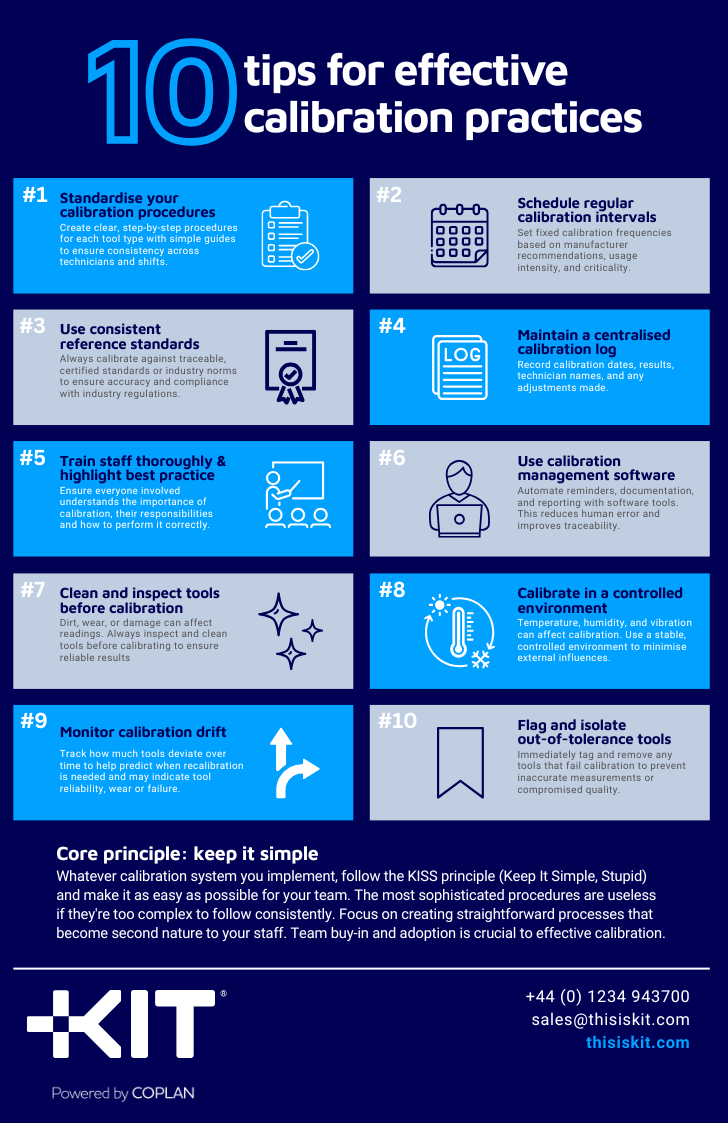
Here’s 10 practical tips for making effective calibration a reality:

1. Standardise your calibration procedures

Create clear, step-by-step procedures for each tool type. Use checklists or simple guides to ensure consistency across technicians and shifts.

2. Schedule regular calibration intervals

Set fixed calibration frequencies based on manufacturer recommendations, usage intensity, and criticality. Use calendar reminders or software to automate scheduling.

3. Use consistent reference standards

Always calibrate against traceable, certified standards or industry norms to ensure accuracy and compliance with industry regulations. Being consistent with your approach to calibration of tools over time simplifies compliance and makes it less painful for the technicians doing the calibrations.

4. Maintain a centralised calibration log

Record calibration dates, results, technician names, and any adjustments made. Digital calibration management systems are ideal for easy access and audits and give that confidence that checks are being done and issues captured.

5. Train staff thoroughly and highlight best practice

Ensure everyone involved understands the importance of calibration, their responsibilities and how to perform it correctly. Include calibration in onboarding and refresher training and celebrate good practice within the team.

6. Use calibration management software

Automate reminders, documentation, and reporting with software tools. This reduces human error and improves traceability.

7. Clean and inspect tools before calibration

Dirt, wear, or damage can affect readings. Always inspect and clean tools before calibrating to ensure reliable results.

8. Calibrate in a controlled environment

Temperature, humidity, and vibration can affect calibration. Use a stable, controlled environment to minimise external influences.

9. Monitor calibration drift

Track how much tools deviate over time. This helps predict when recalibration is needed and may indicate tool reliability, wear or failure. Centralising the calibration history of your tools gives you that at a glance knowledge of potential problems.

10. Flag and isolate out-of-tolerance tools

Immediately tag and remove any tools that fail calibration to prevent inaccurate measurements or compromised quality. Respond early to flagged and recurring issues to reinforce importance. Engage team in refining procedures and tool design or selection / testing of alternatives.

Calibrating tools and instruments doesn’t have to be a tedious chore. By blending smart automation, streamlined workflows, and clear accountability, you can turn calibration from a dreaded task into a seamless part of your routine. But whatever you do, use the KISS principle and make it as easy as possible as team buy-in and adoption is so crucial to effective calibration.

https://thisiskit.com/wp-content/uploads/2026/03/10-tips-calibration.jpg 1280 1920 coplan https://thisiskit.com/wp-content/uploads/2026/02/kit-logo.png coplan2025-09-15 14:17:582026-05-28 13:18:5210 tips for developing effective calibration practices
Page 2 of 212

Pages

  • Aerospace
  • Automotive
  • Blog
  • Calibration Compliance Score
  • Calibration Compliance Scorecard
  • Careers
  • Case Studies
  • Contact Us
  • Coplan visual workspace organisation
  • COSHH & Safety
  • Defence
  • Events
  • Explore KIT
  • Foam Inlays (Drawers & Cases)
  • Food & Drink
  • History
  • News
  • Our Standards & Approach
  • Partners & Memberships
  • Privacy Policy
  • Professional Services
  • Protection Foams
  • Resources
  • Shadow Boards (Foam & Vinyl)
  • Terms & Conditions
  • Terms of Access
  • Terms of Use
  • Tool Calibration Management
  • Tool Inventory Management
  • Tool Standardisation
  • Visual Tool Audits
  • Welcome

Categories

  • Aerospace
  • Automotive
  • Blog
  • Case Study
  • COSHH & Safety
  • Defence
  • Event
  • ExploreKit
  • Foam Inlays
  • Food & Drink
  • News
  • Professional Services & Training
  • Shadow Boards
  • Tool Audits
  • Tool Calibration
  • Tool Inventory Management
  • Tool Standardisation

Archive

  • September 2026
  • August 2026
  • July 2026
  • June 2026
  • May 2026
  • April 2026
  • March 2026
  • January 2026
  • December 2025
  • November 2025
  • October 2025
  • September 2025
  • March 2025
  • February 2025
  • May 2024
  • February 2024
  • January 2024
  • November 2023
  • July 2023
  • May 2023
  • April 2023
  • March 2023
  • July 2022
  • January 2022
  • July 2021
  • May 2021

Take Your Next Step

Click a button below to move one step closer to realising how KIT can simplify your tool management

Read more about KIT Watch Demo Request Info Schedule a Call

KIT® is a registered trademark of Coplan Ltd

Location Location Coplan Ltd, 28 Vincent Avenue, Crownhill, Milton Keynes, MK8 0AB

Phone Phone +44 (0)1908 307956

Mail Mail info@coplancontrol.com

General

Home
Careers
History
Our Standards & Approach
Partners & Memberships
Resources

News & Views

Blog
Case Studies
Events
News

Products

ExploreKIT
COSHH & Safety
Tool Audits
Tool Calibration
Tool Inventory Management
Tool Standardisation
Professional Services & Training
Explore COPLAN Foams
Protection Foams
Foam Inlays
Shadow Boards

Industries

Aerospace
Automotive
Defence
Food & Drink

Contact Us

General
Book a Discovery Call

KIT® is a registered trademark of Coplan Ltd

Location Location Coplan Ltd, 28 Vincent Avenue, Crownhill, Milton Keynes, MK8 0AB

Phone Phone +44 (0)1908 307956

Mail Mail info@coplancontrol.com

General

Home
Careers
History
Our Standards & Approach
Partners & Memberships
Resources

News & Views

Blog
Case Studies
Events
News

Products

ExploreKIT
COSHH & Safety
Tool Audits
Tool Calibration
Tool Inventory Management
Tool Standardisation
Professional Services & Training
Explore COPLAN Foams
Protection Foams
Foam Inlays
Shadow Boards

Industries

Aerospace
Automotive
Defence
Food & Drink

Contact Us

General
Book a Discovery Call

©2026 KIT is a trading style of Coplan Limited
  • Link to Instagram
  • Link to LinkedIn
  • Link to Youtube
  • Terms & Conditions
  • Privacy Policy
  • Terms of Use
  • Terms of Access
Scroll to top Scroll to top Scroll to top
  • Home
  • Products
    • KIT
    • Explore KIT
    • COSHH & Safety
    • Visual Tool Audits
    • Clear Title
    • Tool Calibration Management
    • Tool Inventory Management
    • Tool Standardisation
    • Other Products & Services
    • Protection Foams
    • Foam Inlays (Drawers & Cases)
    • Shadow Boards (Foam & Vinyl)
    • Professional Services & Training
  • Industries
    • Aerospace
    • Automotive
    • Defence
    • Food & Drink
  • Case Studies
  • News & Events
    • Blog
    • News
    • Events
  • About Us
    • Careers
    • History
    • Our Standards & Approach
    • Partners & Memberships
  • Contact Us